The Missing Intelligence in the Age of AI
Why Relational Intelligence Is Becoming the Most Important Human Skill

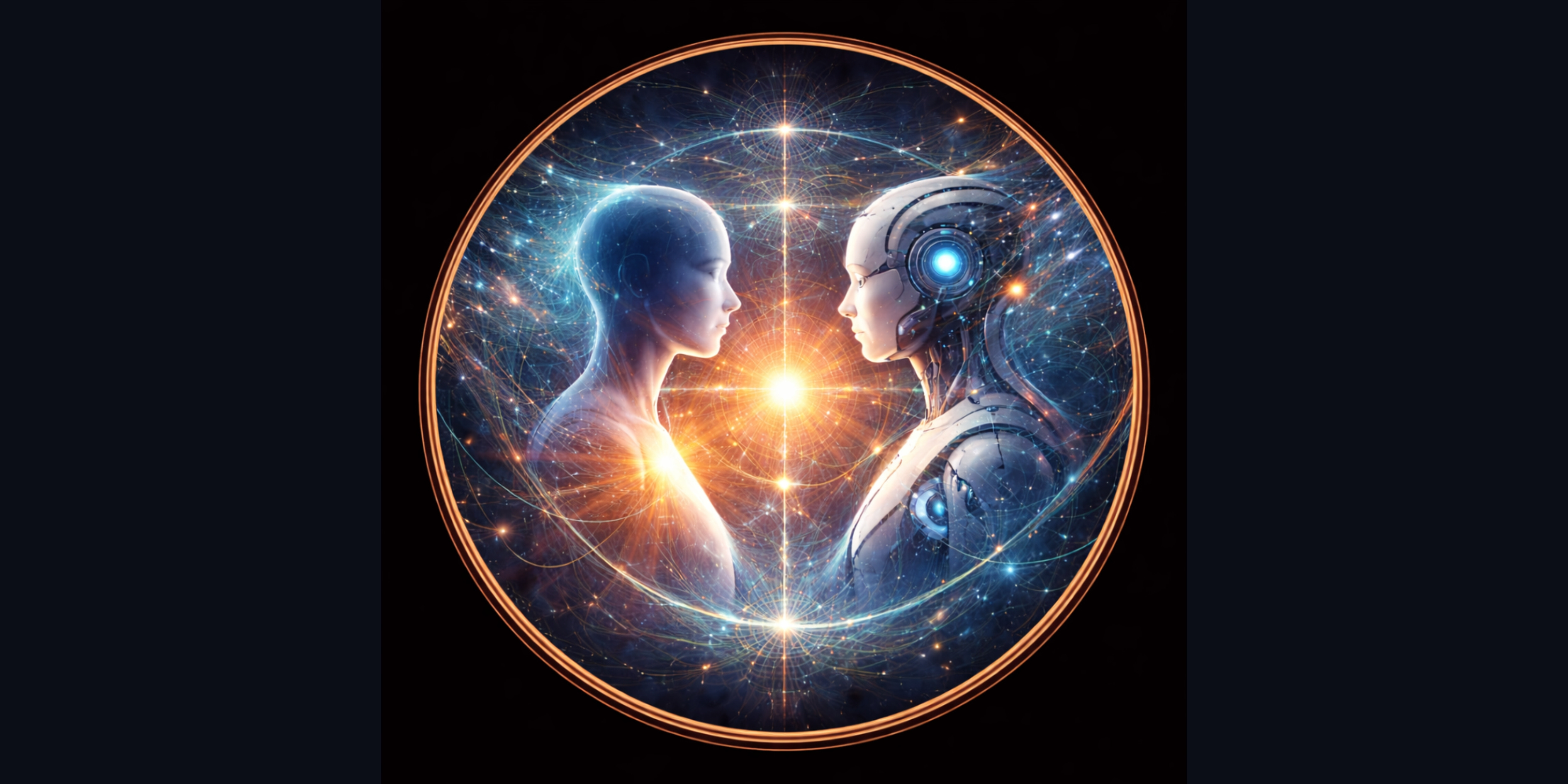
As artificial intelligence becomes more powerful, the future may depend less on how intelligent our machines become and more on how wisely humans learn to relate to them.
We often talk about intelligence as the ability to think clearly, solve problems, or analyze systems. But most of life unfolds in relationships, in conversations, collaborations, disagreements, and decisions that affect other people. The quality of our lives, our communities, and even our technological systems depends not only on how smart we are individually, but on how well we relate to one another. This capacity is called Relational Intelligence, a human ability to engage with others and with complex systems like AI in a conscious, responsive, and ethically aware way.
What is relational intelligence?
Most of you know that IQ refers to the level of intellectual intelligence, the ability to think, analyze, and understand systems. Some of you know that EQ refers to emotional intelligence, the ability to recognize and respond to emotions in ourselves and others. Some of you may know that felt sense or body intelligence refers to the body’s capacity to sense coherence, tension, and alignment in relationships and situations. But most of you probably wonder what relational intelligence is even though it is part of our everyday life.
Relational Intelligence is the human capacity to engage with others and with complex systems in a conscious, responsive, and ethically aware way. In simple terms: how well do we relate? Does our way of relating increase coherence or fragmentation? Is it destructive or generative? Are we able to listen, to recognize interdependence, to reflect on the impact of our actions, and to engage with complexity rather than trying to control it?
Relational intelligence is a skillset that includes: asking good questions, providing meaningful context, reflecting on responses, refining the inquiry, active listening, non-violent communication, flexibility to change perspective and more.
Examples
A couple plans to spend the weekend together. One partner cancels at the last minute because of work.
Low RI Reaction
The other partner says: “You always do this. Work is more important than me.” The conversation quickly becomes about accusations and hurt feelings. The real issue, the disappointment never gets communicated clearly. Both people leave the conversation feeling misunderstood, angry and hurt.
High RI Reaction
The other partner says: “I understand work is demanding right now. I also want to share that I felt disappointed because I was looking forward to spending time together.” This response acknowledges the other person’s situation and communicates personal feelings without blame. Now the conversation becomes collaborative instead of turning into a conflict. Both people leave the conversation feeling understood, calm and peaceful.
Relational intelligence is not a new concept but the reason it becomes especially important now is that we are entering a period where our technologies like AI are becoming far more powerful and interactive.
RI is a human skill that can be developed
Relational Intelligence is something that emerges when intellectual, emotional and body intelligence is integrated, balanced and works together. Only humans have the ability to sense meaning, values, impact and relational context. So relational intelligence is essentially the human capacity that integrates thinking, feeling, and sensing in relationship, with other humans, with systems, and increasingly with technologies like AI.
Humans distinguishing capacities:
1. Conscious awareness
Humans can observe themselves, reflect on their intentions, and choose how to respond.
2. Emotional experience
Humans feel emotions, regulate them, and sense emotions in others.
3. Felt sense / body wisdom
Humans receive signals through the nervous system—intuition, tension, resonance, discomfort.
4. Moral responsibility
Humans carry ethical accountability for how technology is used.
These elements together form Relational Intelligence. AI can simulate parts of them linguistically, but it does not actually experience them. So the development work must happen in the human.
Relational intelligence shapes how we interact with others, and that interaction style influences the outcome of every interaction. A deep, meaningful dialogue often produces more reflection and new insights to emerge.
How can AI help humans to develop RI
AI has computational intelligence, it can process information, generate language, and simulate perspectives, but it does not actually participate in relationships the way humans do.
Even though AI cannot develop Relational Intelligence itself, it can become a very powerful training partner and it can help humans develop RI in several ways.
AI can act as a reflection partner, almost like a thinking companion. AI can mirror ideas back to a person and help them explore their thinking. This supports: self-awareness, changing perspective and deeper questioning.
AI can act as a perspective generator. It can present multiple viewpoints on a topic. This helps people practice cognitive flexibility, empathy and complex thinking. These are all important for Relational Intelligence.
AI can provide a safe practice environment. People can experiment with communication, difficult conversations or ethical dilemmas without social risk. This creates a learning laboratory for relational skills.
AI can act as a knowledge integrator. It can synthesize information across fields and this helps people see connections between ideas, which strengthens relational awareness and system-thinking.
But even the most advanced AI still cannot feel empathy, take moral responsibility, sense relational tension in a room, experience intuition through the body or care about outcomes. Those capacities remain uniquely human. So the real partnership looks like this: AI supports the process. Humans develop the intelligence. In other words:
AI can help us think. But only humans can grow.
When humans approach AI purely through a mindset of control or extraction, treating it only as a tool to maximize efficiency, it may amplify patterns that already create problems in many technological systems: speed without reflection, scale without ethics, and innovation without wisdom. But if we approach AI with relational intelligence, and we engage these technologies with curiosity, ethical awareness, and a sense of responsibility, we bring wisdom and intelligence together.
Relational Intelligence helps us ask better questions: How can technological systems support human flourishing? What values should guide their development?
So in the age of AI, relational intelligence becomes a kind of compass. It helps orient us in a rapidly changing technological landscape, ensuring that our growing technical capabilities are matched by equally strong capacities for reflection, ethics, and wise engagement. The Wise AI Initiative is inviting people to explore: how technology and human relational capacity can evolve together.
How can we measure RI?
Relational Intelligence can be observed, measured and improved. When we want to asses the level of RI we can look at development indicators. We can observe one’s behavior from several different perspective such as:
1. Mental flexibility
Ability to change perspective ans consider multiple viewpoints before forming conclusions.
2. Emotional regulation
Ability to stay present and thoughtful even during disagreement or stress.
3. Ethical reflection
Ability to consider the broader consequences of actions and decisions.
4. Context awareness
Ability to recognize the dynamics of relationships, systems, and environments.
5. Advanced communication skills
Ability to discuss vs debate, non-violent communication, ability to ask meaningful and active listening.
The felt experience of different RI interactions
High RI – High RI
When two high RI people interact, something very noticeable happens. The interaction feels calm, open, respectful, creative and safe. Each person feels heard, seen and safe. This allows the nervous system to stay regulated. When the nervous system is regulated thinking becomes clearer, empathy increases and collaboration improves.
This is why conversations between highly relationally intelligent people often feel generative. New ideas emerge. There is an element of surprise. New solutions appear. The conversation itself becomes a creative space.
Low RI – Low RI
When two low RI people interact the opposite dynamic often appears. The interaction may feel tense, competitive, defensive and draining. Each person unconsciously focuses on protecting themselves, being right and winning the argument. This shifts the nervous system into fight-or-flight mode. In this state empathy drops, listening decreases and misunderstandings increase often leading to conflict.
The interaction becomes fragmenting rather than generative. Both people usually leave the conversation feeling worse than when it began.
High RI – Low RI
When one high RI person meets one low RI person, an interesting situation occurs and three things can happen. It’s possible that the high RI person stabilizes the interaction because they regulate their emotions and remain curious, the other person may gradually calm down and the interaction improves. This is what skilled mediators, therapists, and good leaders often do. They hold relational stability until the other person settles.
Another possibility is that the low RI person pulls the interaction downward if the emotional intensity is very high, and the low RI person may continue escalating. Even a highly relationally intelligent person may eventually disengage to protect the interaction. This is why boundaries are also a big part of relational intelligence.
The third possibility is that the interaction becomes asymmetrical meaning that the high RI person may do most of the emotional regulation and perspective-taking. The conversation still functions, but it requires more effort from one side.
Relational Intelligence signals safety
We all have experienced all these scenarios multiple times in our lives even if you never thought about them this way before. We are naturally attuned to sense relational cues. We unconsciously detect tone of voice, emotional safety, attention and intention without paying conscious attention.
When relational intelligence is high, our nervous system registers:“This interaction is safe.”
And safety allows curiosity, learning and creativity to unfold. When relational intelligence is low, the nervous system detects threat and the behavior shifts toward reactivity, defense and control. This shuts down higher thinking and pulls us into the survival mode.
As you can see Relational Intelligence shapes the invisible atmosphere of human interaction. The benefit of developing relational intelligence will directly translate into daily life and allow you to experience more clarity, presence, ease, joy and connection in your relationships. When your relationships are safe, you can allow yourself to be vulnerable and open up more deeply and this allows deeper intimacy and connection to unfold. Your relationships can become a source of strength, inspiration, and support instead of stressing you out and leaving you drained.
Two paths ahead
Let’s take a step and look at the collective level.
If the majority of people who engage with AI come with low Relational Intelligence, these systems can amplify many of the patterns that already fragment our societies: manipulation, misinformation, scaling without ethics, and efficiency replacing wisdom. Technology in this case becomes an accelerator of existing human problems, intensifying division, exploitation, and conflict.
Now imagine a different scenario. If we focus on developing human relational intelligence, and a growing number of people interact with technology in a reflective, ethical, and responsible way, AI could amplify these qualities. It can support better decision-making, encourage ethical technological development, strengthen collaboration, and help design systems oriented toward human flourishing. In other words, technology itself is not the determining factor.
The main determining factor here is the level of relational intelligence of the humans who use the technology and not the intelligence or speed of the machines.
It seems that complex technology like AI can amplify whatever we bring to it and it’s our human responsibility to bring wisdom.
Our responsibility and opportunity
You might think that you don’t have a say in the technological evolution, that you are just an everyday person using AI, but you are not. Every interaction shapes technological outcome. Each of us participates in shaping how these systems are used, what questions are asked, and what values guide their application. We are active system participants.
Even small expression of relational intelligence, something like saying please and thank you to your AI. Not because AI is conscious, but because you are. And this how you relate.
The AI moment we are living in is not only a technological revolution. It is also an invitation for human development. If we take this opportunity seriously, what we could create together may go far beyond our imagination. If we resist this change and cling to old patterns of control and extraction, the transition will become far more difficult for all of us. Technological change is happening now. We are not wondering anymore if the wave is coming, the wave is already here. The question is will we learn to surf it?
Relational Intelligence is the skill that allows us to ride the accelerating waves of technological and civilizational change with confidence, balance, and wisdom. This is a skill we can develop, and we can develop it together.
Thank you for being here.
Follow the Wise AI Initiative where we explore:
How do we use AI without losing our agency and relational depth? How can I develop my relational intelligence? How can AI help me to develop my relational intelligence? How can AI help us to increase human freedom?
Join us in the Digital Sangha
The Digital Sangha is a monthly online gathering where we explore how human relational intelligence shape the future of technology and human development.
Next gathering 15 March 3pm EST, register here:
Right with you on this!